A presentation that waits for questions
The walkthrough deck earned its permanence — the material works. The open question is why every delivery still requires you.
There is a deck you have presented so many times you could give it over a bad phone line from a moving train — the product overview, the onboarding walkthrough, the architecture talk for technical evaluations. It earned its permanence honestly: the material works, the ordering works, the one slide everyone photographs is in there. And every delivery still costs a half hour of the one person who can give it, plus the scheduling dance to find that half hour.
Decks like this sit in a strange category: too important to stop giving, too repetitive to justify who gives them. The thirty-first delivery is not better than the thirtieth because you were there. It is better only where the listener needed something the deck didn’t say — and that part, the live part, is the only part that ever needed you.
The recording plateau
Async video looked like the answer for a while, and for some jobs it was one. Record the walkthrough, share the link, let people watch on their own time — for announcements and broadcast updates, this remains exactly right. For teaching decks it plateaus fast, and the reasons are structural. A recording runs at one pace and one depth, chosen in advance for a viewer the presenter had to imagine. The newcomer needs slide four explained twice; the engineer wants to skip to slide nine and interrogate it. Both get the same thirty minutes, and neither can raise a hand.
Presenters feel the difference immediately: presenting to a camera means answering nobody. Viewers feel it too — attention drifts in ways it doesn’t when someone is presenting to you, and the confusion that a live presenter would catch in your face simply accumulates. The recording delivers slides. Delivering understanding was always a conversation.
Presented, one-on-one
So here is the arrangement we build for that deck: record the next delivery you were going to give anyway, and that is the last one that needs you. From then on your Deputy presents it — your actual slides, flipped in order, narrated in your framing — and it pauses mid-deck whenever the listener has a question. It answers from the briefing, citing its source like everywhere else, then picks the thread back up where it paused. The listener who needs slide four twice gets it twice. The one who wants to fight about slide nine gets a sparring partner at whatever depth they bring.
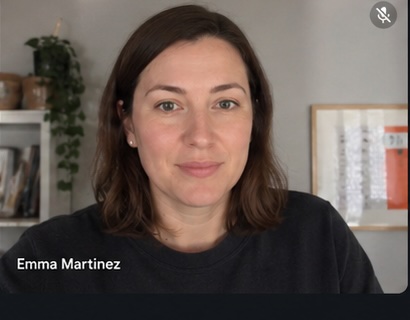
Every delivery is one-on-one, at any hour, which quietly deletes the scheduling dance — the walkthrough happens when the listener is ready rather than when two calendars intersect. The people who most need the story told well — the seller in their first week, the marketer who wants the framing from the source, the champion re-telling it inside their own company — get the full version, in your words, without borrowing your afternoon. And because questions route through the same machinery as everything else, the deck gets smarter with use: the question your deck never answers gets escalated, answered once by you, and folded into the briefing for the thirty-second delivery.
When a recording is still right
The honest boundary line: some presentations should stay recordings. The launch announcement, the all-hands message, the compliance module where uniform delivery is the legal point — those are performances, and a performance benefits from being fixed. The deck in your dock is different because its job is teaching, and teaching is the thing that degrades when you freeze it. A useful rule of thumb: if you would happily answer questions in the middle of it, it wants to be presented, and it no longer has to be presented by you.
Give the walkthrough once. From then on it presents — and pauses for questions.
Join the waitlistWe'll let you know the moment Deputy's open to you.
Or ask the live Deputy on the landing page