Your meetings are transcribed now. What changed?
Recording and summarizing became table stakes almost overnight. The Monday questions still arrive — which says something about what transcripts are.
The meeting note-taker wave has fully arrived. A recorder joins the call, the transcript appears minutes after it ends, a tidy summary with action items lands in the channel. Standalone tools raced each other to this, and then the meeting platforms built it in; recording and summarizing is now roughly as remarkable as calendar invites. Credit where due — it is genuinely useful, and nobody wants to go back to being the designated typist.
And yet, on Monday, the question still lands in your DMs. “Quick one — does the sync work if they’re behind a VPN?” You answered that, out loud, at length, in a call that was recorded, transcribed, summarized, and filed. The recall problem is solved. The being-asked problem is untouched, which suggests recall was never the actual drain.
A pile of what was said
A transcript is a record of utterances, and utterances make a poor knowledge base. They arrive unreconciled: what you said about the roadmap in March and what you said in May disagree, and both transcripts preserve the disagreement faithfully, forever, with no marker for which one still holds. They arrive unowned: nobody vouches for a transcript the way an author vouches for a document. Mostly they arrive unread — the archive is write-only for everyone except the occasional soul spelunking for a decision.
Summaries compress the pile without curing any of this, and AI search over the archive gives the pile a chat interface — better than spelunking, still bounded by what a heap of moment-in-time statements can support. We wrote about that ceiling from the answering side in An answer you can check: a system is only as trustworthy as the record it speaks from, and a transcript archive is a record optimized for what was said, on purpose, rather than for what is true.
Two jobs in the room
So the interesting question for the next generation of meeting tools: if listening and filing is table stakes, what should the thing in the room actually do? Watching how the expertise tax gets paid in meetings, we landed on two jobs.
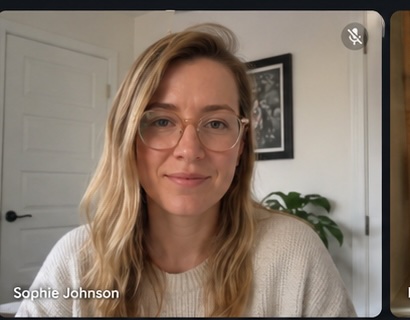
First, answer when asked. A meaningful share of meeting time is one person retrieving facts from another’s head — the customer call where the account executive turns to you for the integration question, the internal review that stalls on “wait, how does that behave on the old version?”. With a Deputy in the room, you say “hey Deputy” and it answers out loud, right there, from the briefing — and what it says is checkable afterwards, because the answer traces to a line. The meeting gets unblocked without anyone opening a doc or promising a follow-up email.


 Maya“Hey Deputy”
Does WaterPro hold up in a basement with no cell signal?
It works offline — it falls back to intermittent wake-ups every 6 hours when there's no signal.
Second, learn while you explain. When an expert spends four minutes explaining edge-case behavior in a call, that explanation is the most valuable four minutes of the transcript and, historically, the most wasted. The rest of the time a Deputy attends like a sharp new hire: listening, taking notes — and then treating what you explained as a candidate update to the briefing, reconciled and proposed as a diff for your approval, the same way everything else lands. Teaching it cost nothing beyond holding the meeting you were already holding. The explanation stops being an utterance and becomes a line — which is the difference between a meeting that was recorded and a meeting that taught something.
The transcript still matters
None of this retires the transcript. It stays the raw material and the receipt — the honest record of who said what, which turns out to matter more, not less, once an AI is answering in your name. (Knowing exactly what was told to whom is what makes it possible to correct people laterwhen the answer changes.) The shift is in destination. The wave that just ended treated the transcript as the product. Treated as input — something to be reconciled into a record an owner actually vouches for — the same hour of audio comes out the other side as knowledge instead of archaeology.
A meeting attendee that answers when asked, and keeps what you taught.
Join the waitlistWe'll let you know the moment Deputy's open to you.
Or ask the live Deputy on the landing page